

Some days, you sit down to work and barely get started before a message, an email or another task pulls you away. By the afternoon, you’ve been busy for hours but haven’t made much progress.
Flow state is the feeling of being fully absorbed in what you’re doing. You might recognize it from writing, studying, making music or playing sport: your attention stays with the activity, and you stop checking the clock.
The diagram below illustrates moving from distraction towards focused work.
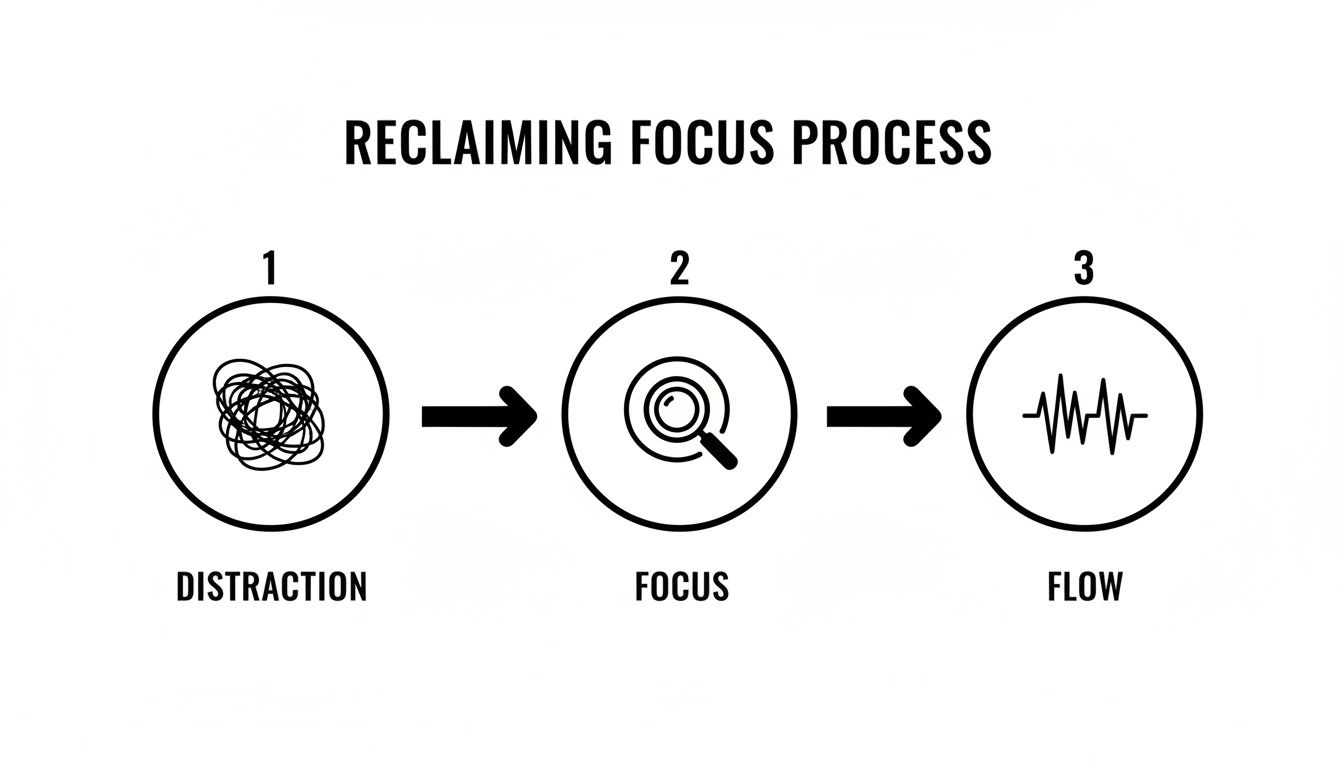
It’s all about actively moving from a scattered mental state to one of deliberate concentration.
You can’t guarantee flow every time you work. But you can create conditions that make focused work easier. Here are five practical ways to start.
1. Choose one clear task
“Work on the project” gives you very little direction. “Write the first three paragraphs” tells you exactly where to begin.
Before you start, choose one task and decide what useful progress would look like. Keep it realistic for the time you have.
For example:
-
Studying: Read one chapter and write a short summary.
-
Writing: Draft one section without editing it.
-
Planning: Choose the three priorities for next week.
If the task feels overwhelming, break it into a smaller first step. Opening a document and writing a rough outline is enough to get moving.
Aim for something that needs your attention without leaving you unsure how to begin.
2. Make distractions harder to reach
You don’t need a perfect workspace, but a few changes can reduce the temptation to switch tasks.
Close browser tabs you don’t need. Turn off non-essential notifications and put your phone somewhere you won’t keep looking at it. Leave only the documents and tools you need in front of you.
If you work around other people, let them know when you need some uninterrupted time. A calendar block or a simple message can help:
“I’m focusing on this until 11. I’ll check my messages afterwards.”
Keep a notepad nearby for unrelated thoughts. If you remember an email you need to send or something you need to buy, write it down and return to your task. You can deal with it later without trying to keep it in your head.
3. Build a simple starting routine
Starting is often the difficult part. A familiar routine gives you a clear point where preparation ends and work begins.
Keep it short. You could:
-
Clear a space on your desk.
-
Get a glass of water.
-
Write down your task.
-
Set a timer and begin.
You might prefer quiet, or find that gentle instrumental music helps you settle. Try a few options and use whatever feels least distracting. There’s no particular playlist or sound you need to achieve flow.
If you enjoy including a drink in your routine, HIGH VIBE dink is a caffeine-free option with grape and blackcurrant flavours. It can sit alongside your notebook and water, but the routine should work with whatever you prefer to drink.
If you prefer a wearable option, you can also explore the HIGH VIBE Patch
The aim is to make getting started feel familiar, rather than turning preparation into another task.
4. Give yourself a manageable block of time
You don’t need a whole free afternoon to make progress. Start with a period you can realistically protect, such as 25–45 minutes.
During that time, stay with your chosen task. If you get stuck, pause to work out the next small step before opening another app or checking your messages.
When the timer ends, notice how you feel. If you’re working comfortably and don’t need to stop, you might continue. If your attention is fading, take a break.
Step away from the screen, stretch, get some water or walk around. Then decide whether to return to the task or move on.
Treat the timer as a helpful boundary, rather than a test. Different tasks and different days call for different lengths of time.
5. Notice what helps you focus
Pay attention to when focused work feels easiest. You may prefer writing in the morning, working after a walk or studying somewhere quieter than home.
Over a week, make a brief note of:
-
When you worked.
-
What you were doing.
-
What helped or interrupted you.
Look for patterns you can use. If mornings tend to suit demanding tasks, try to protect some morning time. If a noisy room makes reading difficult, save it for somewhere quieter when possible.
Also notice the basics: whether you’ve slept enough, eaten regularly and had something to drink. A work routine can help organise your attention, but it doesn’t replace rest.
On days when concentration is difficult, reduce the size of the task. Finishing one useful step is still progress.
What if you don’t reach flow?
A work session doesn’t have to feel effortless to be worthwhile. You might spend half an hour working carefully without ever losing track of time.
Instead of judging the session by whether you reached flow, ask:
-
Did I make progress on the task I chose?
-
What interrupted me?
-
What could I change next time?
That gives you something practical to build on. The goal is to make focused work more accessible, rather than chase a particular feeling every time you sit down.
Frequently asked questions
How long does it take to get into flow state?
There isn’t a fixed time that applies to everyone. It depends on the task, your surroundings and how you feel that day. Give yourself time to settle without expecting an immediate change.
Do I need caffeine to focus?
No. Caffeine isn’t a requirement for focused work. You can build your routine around clear goals, fewer distractions and regular breaks, with or without a caffeinated drink.
Can flow happen outside work?
Yes. People describe feeling absorbed in activities such as drawing, cooking, playing music, gaming and sport. Choose an activity that interests you and gives you something engaging to work towards.
Start with one task, put distractions aside and give it a manageable amount of time. You don’t need a perfect routine just a useful starting point you can return to.
